Securing a dependable pest control service in Tarzana requires addressing the specific ecological pressures created by the Santa Monica Mountains interface. Properties along foothill canyons face continuous pest migrations ranging from subterranean termites to roof rats seeking moisture in residential attics.
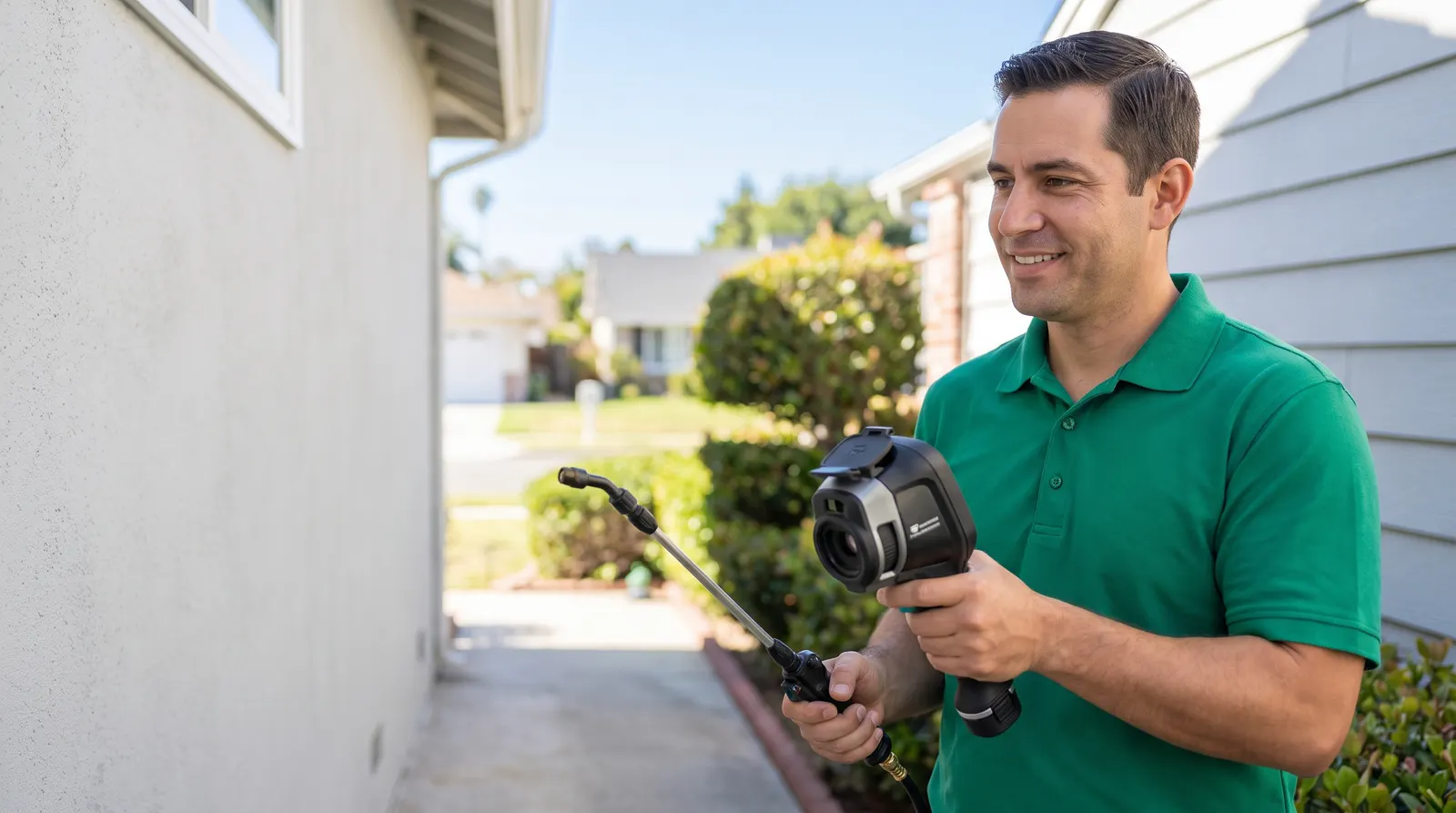
A pest control service in Tarzana is a specialized structural defense and property management solution that identifies insect and vertebrate pests, eliminates active infestations, and seals physical entry points against recurring intrusions.
Every service reflects the same meticulous attention to detail — whether it's a single job or a larger pest control service project across Tarzana.
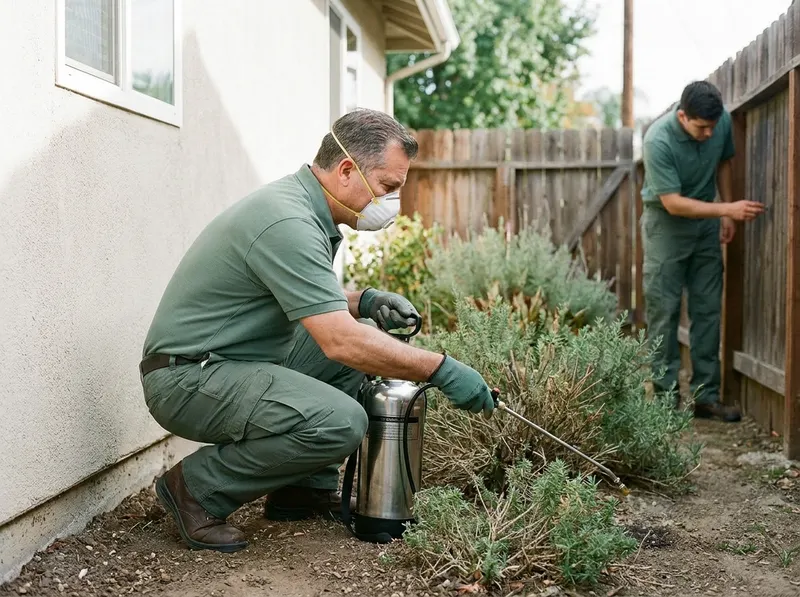
Comprehensive residential pest management provides single-family homes, foothill estates, and multi-story hillside residences with a multi-layered barrier against invading arthropods and environmental pests. The service commences with an exhaustive exterior foundation inspection, examining foundation weep screeds, stucco expansion joints, plumbing and utility penetrations, window casings, and perimeter garden beds. Technicians apply targeted micro-encapsulated formulations to the exterior perimeter wall up to three feet high and outward two to three feet across soil and hardscape interfaces. This barrier establishes a continuous protective boundary that prevents exterior invaders—such as Argentine ants, smoky brown cockroaches, wolf spiders, earwigs, and silverfish—from breaching the structure. Interior treatments are deployed with pinpoint precision, utilizing non-volatile crack-and-crevice gel baits and mechanical monitoring stations inside utility closets, sub-sink cabinets, and garage corners to eliminate harborages without airborne chemical drift. By maintaining regular seasonal barrier applications, homeowners establish proactive defenses that adapt to shifting temperature and rainfall patterns throughout the San Fernando Valley.
View details →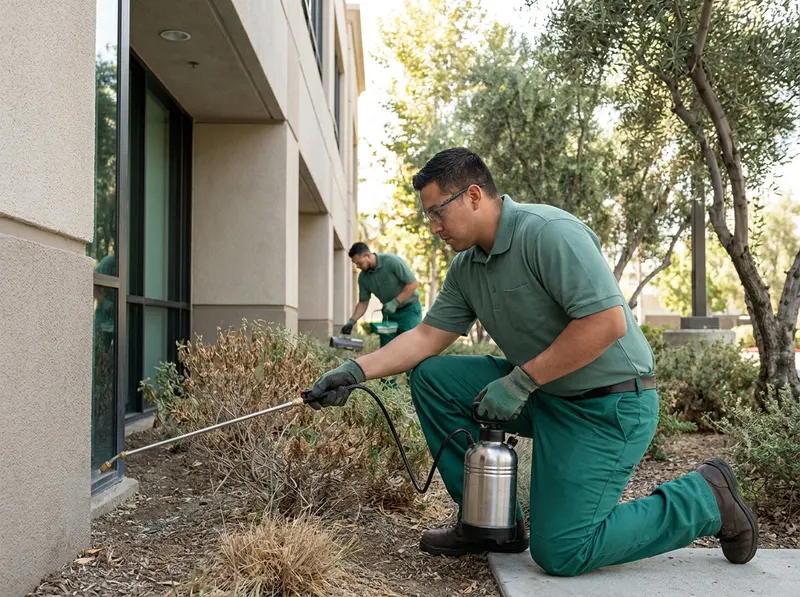
Commercial pest management delivers compliant, low-impact, and discrete protection for professional medical offices, retail plazas, corporate facilities, educational institutions, and hospitality venues. Commercial facilities require rigorous adherence to structural sanitation standards, precise documentation, and regulatory Integrated Pest Management guidelines to eliminate liability and maintain public safety. Technicians establish exterior tamper-resistant rodent monitoring stations along property perimeters and loading docks, systematically logging consumption metrics and pest trends on every scheduled service visit. Inside sensitive customer-facing environments, food-handling areas, and medical suites, service specialists utilize non-pesticidal pest monitoring devices, mechanical insect traps, and targeted biorational gel applications in concealed structural voids. Detailed electronic service manifests, hazard assessments, and sanitation recommendations are generated after every inspection, empowering property managers to resolve physical harborage points and seal structural vulnerabilities before pest activity can compromise operational continuity or violate local municipal health codes.
View details →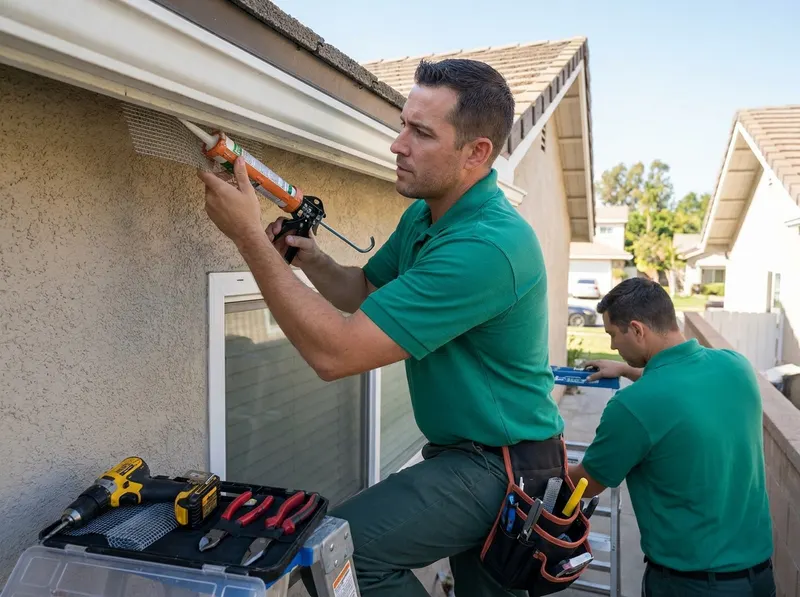
Rodent exclusion and eradication protocols provide permanent physical defense against destructive roof rats (Rattus rattus), Norway rats, and house mice that invade attic insulation and crawlspaces. Roof rats are exceptional climbers that traverse overhead power lines, dense bougainvillea, and tall palm fronds to access roof junctions, clay tile eaves, dormer louvers, and chimney flashings. Once inside, rodents contaminate insulation with droppings, spread allergens, and gnaw on electrical wiring, creating severe fire hazards. Our structural exclusion methodology begins with a forensic roofline-to-subfloor inspection to locate every opening one-quarter inch or larger. Technicians seal identified breaches using heavy-duty 23-gauge galvanized steel hardware mesh, metal flashing, copper wire mesh, and elastomeric structural sealants that rodents cannot penetrate. Concurrently, a dedicated interior trapping program utilizing mechanical wooden snap-traps is deployed inside attic spaces and subfloors to rapidly remove trapped rodents without utilizing poisonous rodenticides that cause animals to perish and decay inside wall voids.
View details →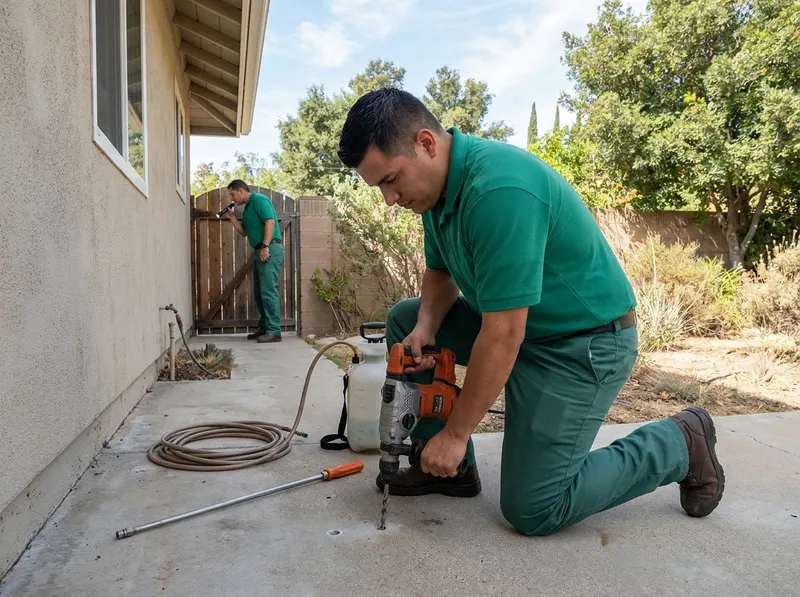
Structural wood-destroying insect management targets both Western drywood termites (Incisitermes minor) and subterranean termites (Reticulitermes hesperus) before they compromise the integrity of structural framing, floor joists, and architectural roof rafters. Drywood termites establish colonies directly inside sound timber without needing ground contact, excavating hollow galleries and ejecting distinctive hexagonal fecal pellets through tiny kick-out holes in exterior fascia boards, exposed rafters, and window framing. Technicians conduct thorough wood sounding and optical fiber-optic void inspections to delineate gallery boundaries, followed by precision drill-and-inject treatments utilizing non-repellent liquid termiticides or expanding foam formulations that saturate the colony matrix. For subterranean termites emerging from damp soil beneath concrete slabs, technicians execute localized soil trenching and deep-rod injections around foundation perimeter footings, saturating the subterranean travel routes with non-repellent termiticide barriers that foraging worker termites transfer back to the subterranean nest, eliminating the reproductive queen and collapsing the entire colony.
View details →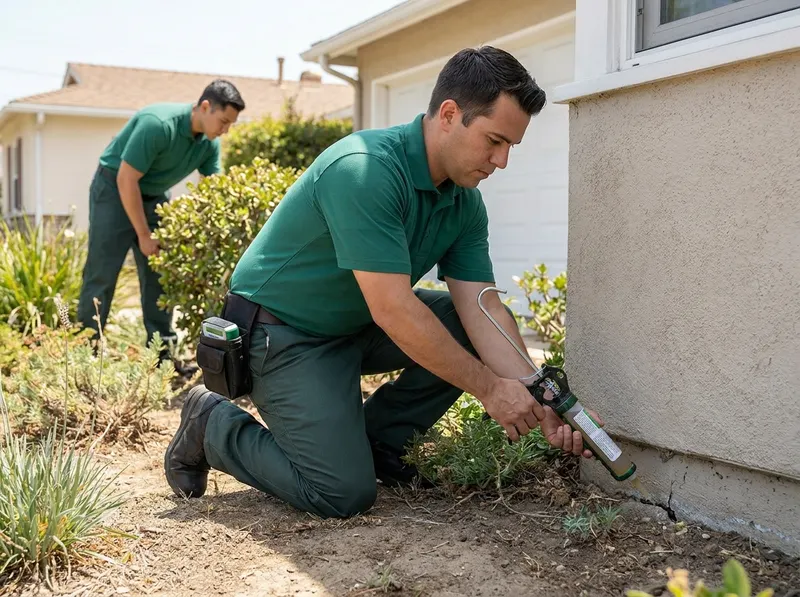
Argentine ant (Linepithema humile) containment requires specialized non-repellent baiting and barrier strategies engineered to defeat the unique biology of super-colonies featuring hundreds of co-existing queens. Traditional over-the-counter pyrethroid sprays act as spatial repellents, which trigger a survival mechanism known as budding, causing single colonies to fracture into multiple independent satellite nests throughout wall cavities and floor spaces. Our professional management protocol avoids repellent sprays entirely, utilizing slow-acting non-repellent liquid formulations and sugar-protein attractant baits. Foraging worker ants walk across treated zones and consume liquid baits, carrying the active ingredients on their cuticles and within their digestive tracts back to subterranean nests. Through natural social grooming and mouth-to-mouth food sharing (trophallaxis), the slow-acting active ingredient is distributed evenly throughout the entire queen hierarchy and larval brood, collapsing the multi-queen colony infrastructure over a period of several days without triggering defensive reproductive scattering.
View details →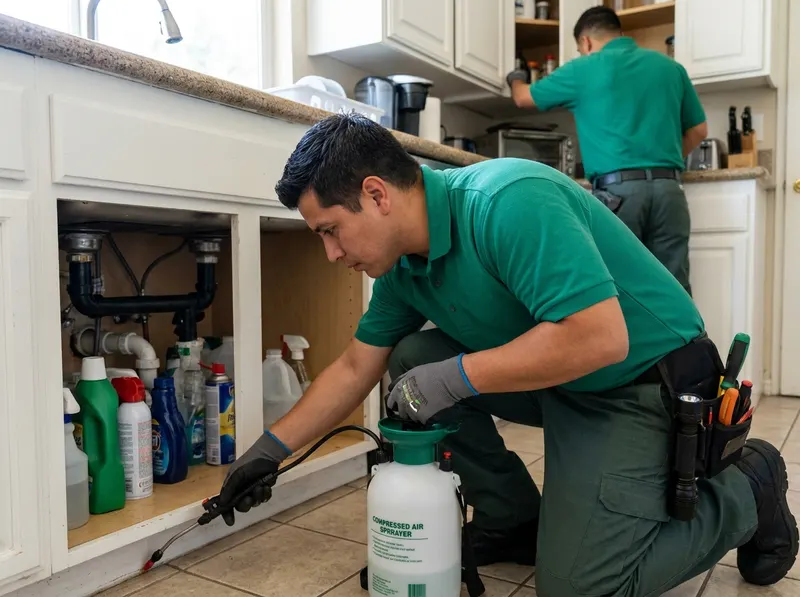
Cockroach eradication utilizes intensive two-phase cleanout protocols tailored to eliminate German cockroaches (Blattella germanica) in kitchen environments and large peridomestic species such as American and Oriental cockroaches in subfloors and plumbing chases. German cockroaches reproduce rapidly, with a single female producing an egg capsule (ootheca) containing up to 40 nymphs every few weeks, quickly infesting behind motor housings, inside electrical receptacles, under sink cabinets, and within cabinet hinge assemblies. Our technicians deploy micro-targeted placement of high-palatability gel baits alongside synthetic Insect Growth Regulators (IGRs) that chemically interrupt juvenile hormone balance, rendering emerging nymphs sterile and unable to complete normal exoskeleton molting. For exterior Oriental and American cockroaches migrating upward from sewer access vaults and damp foundation expansion joints, perimeter micro-granules and specialized drain void treatments are applied to eliminate resting harborages and sever the transition corridor between utility lines and interior structural voids.
View details →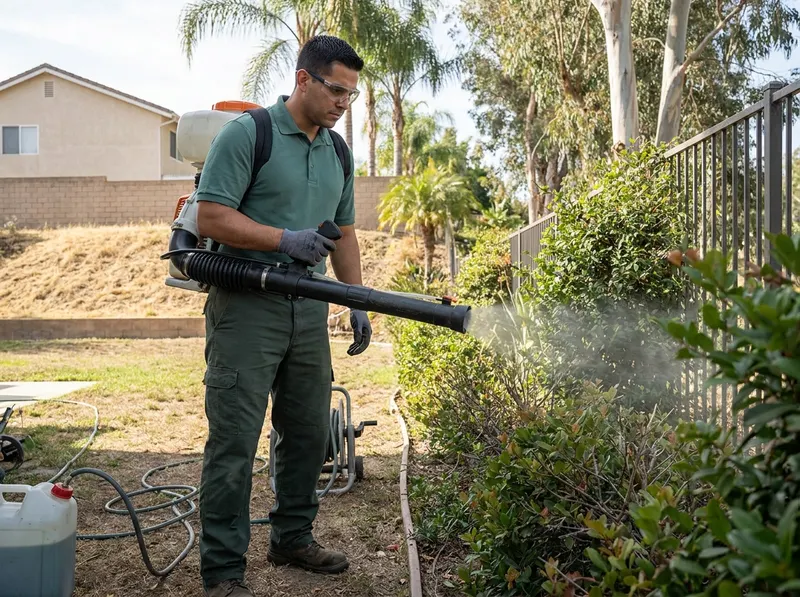
Mosquito mitigation programs suppress populations of invasive Aedes mosquitoes (including the Asian tiger mosquito and yellow fever mosquito) and native Culex vectors around outdoor living environments, swimming pool areas, and hillside patio terraces. Invasive Aedes mosquitoes are aggressive daytime biters that breed in microscopic amounts of water—such as self-watering planter saucers, clogged landscape drains, discarded bottle caps, and ornamental fountain crevices. Technicians conduct comprehensive property source-reduction audits to eliminate cryptic standing water reservoirs, applying biological larvicides containing Bacillus thuringiensis israelensis (Bti) into permanent water features, landscape catch basins, and French drain collection boxes to eliminate developing mosquito larvae before they pupate into flying adults. For mature adult mosquitoes resting in shaded foliage, professional power-assisted misting equipment applies residual barrier products to the undersides of dense ornamental shrubbery, ivy groundcovers, and perimeter tree canopies, significantly knocking down adult mosquito populations.
View details →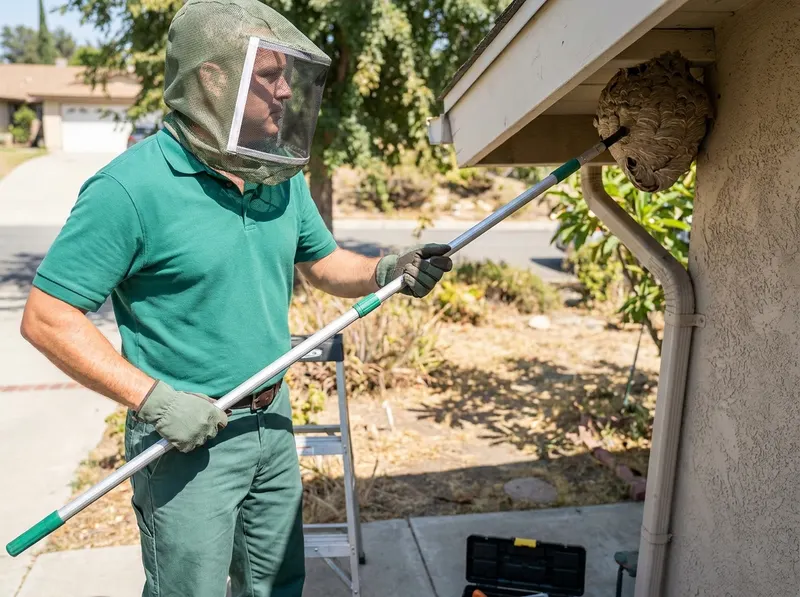
Stinging insect extraction delivers safe, immediate neutralization and physical removal of paper wasp nests, yellowjacket subterranean colonies, mud daubers, and foraging hornet aggregations constructed on architectural eaves, window trims, and patio overhead structures. Paper wasps and yellowjackets pose substantial medical hazards to families, guests, and domestic pets due to their territorial defense instincts and capacity to deliver multiple venomous stings. Technicians equipped with specialized protective gear execute targeted pressurized aerosol void treatments that rapidly knock down active adult flying populations on contact. Following knockdown, technicians physically scrape and remove nest structures, cleansing the attachment substrate with specialized residual deterring agents to break pheromone scent markers and prevent returning queens from constructing new nesting combs in the exact same architectural recesses throughout the warm summer and autumn breeding cycles.
View details →A pest control service in Tarzana is a specialized structural defense and property management solution that identifies insect and vertebrate pests, eliminates active infestations, and seals physical entry points against recurring intrusions.
You get a firm, itemized quote for your pest control service before any work begins — no surprises, no pressure.
Careful prep, tidy work, and a full cleanup when we are done. We treat your home and belongings like our own.
The same trusted, background-checked team from the first call to the final check.
If you require continuous protection against perimeter crawling insects such as Argentine ants, black widow spiders, oriental cockroaches, and field crickets moving in from outdoor landscaping, choose a scheduled quarterly perimeter maintenance defense program. If you are dealing with a sudden indoor emergence of German cockroaches or cat fleas inside living spaces, choose an intensive two-stage cleanout protocol; the trade-off is higher upfront labor and mandatory occupant preparation versus the long-term buffer of recurring exterior barrier maintenance. If you hear nocturnal scratching in attic cavities, detect foul odors, or discover chewed electrical wiring in a sub-area crawlspace, choose full mechanical structural exclusion paired with interior snap-trapping rather than exterior rodenticide bait boxes alone; the trade-off is a larger initial investment in construction-grade metal sealing materials versus the persistent hazard of dead rodents decaying inside concealed wall voids. For timber-destroying organisms, choose localized non-repellent termiticide injections when drywood termite activity is confirmed in accessible, isolated structural framing or exposed roof eaves, but choose whole-structure containment fumigation when infestation galleries extend into concealed wall cavities, subfloor framing, and inaccessible roof rafters; the trade-off involves multi-day property evacuation, utility shutoffs, and exterior preparation versus localized spot defense. If you manage outdoor biting insect populations across expansive hillside parcels, choose a combined biological larvicide and foliage misting program targeting active breeding zones; the trade-off is seasonal recurring monthly maintenance during warm weather versus uncontrolled mosquito proliferation around outdoor entertainment areas. When addressing subterranean termite activity near concrete slab foundations, choose liquid non-repellent perimeter trenching and rod injection over perimeter bait stations if you need immediate horizontal chemical barriers against active foraging galleries, whereas bait stations fit better around structures with complex adjoining hardscape, delicate flagstone walkways, or close proximity to sensitive watershed runoff points where continuous trenching would disrupt masonry.
Every project gets a firm, written price after a free on-site visit. Ranges below for orientation.
Tell us about your pest control service job and we'll send a clear, written quote — usually the same day. Or just call and talk to a real Tarzana pro.

Properties located near the Santa Monica Mountains boundary, particularly along the Caballero Canyon Trail and Marvin Braude Mulholland Gateway Park corridors, experience intense pest migrations linked to chaparral microclimates. Extended dry spells drive roof rats and Argentine ant super-colonies out of native brush down into landscaped properties in Braemar Estates and Tarzana Hills seeking irrigation lines and pool equipment vaults. In older flatland properties around Melody Acres, mature tree canopies bridging rooflines require rigorous branch clearance and specialized architectural sealing around tile eaves to maintain pest-free structures. Along the commercial corridors of Ventura Boulevard, Reseda Boulevard, and Wilbur Avenue, high-density retail strips, restaurants, and medical facilities near the Providence Cedars-Sinai Tarzana Medical Center face constant pest pressure from sewer-associated American cockroaches, pavement ants, and urban mice that exploit common utility chases and refuse disposal enclosures. In hillside custom homes built throughout Silver Hawk Ridge and Monte Verde Estates, expansive Spanish tile roofs, multi-level framing transitions, and zero-clearance foundation weep screeds adjacent to native slopes present complex architectural access points where subterranean termites, drywood termites, and western black widows establish harborages unless proactive physical sealing and targeted non-repellent perimeter chemical zones are methodically maintained.
 Sure Shield Pest Services